
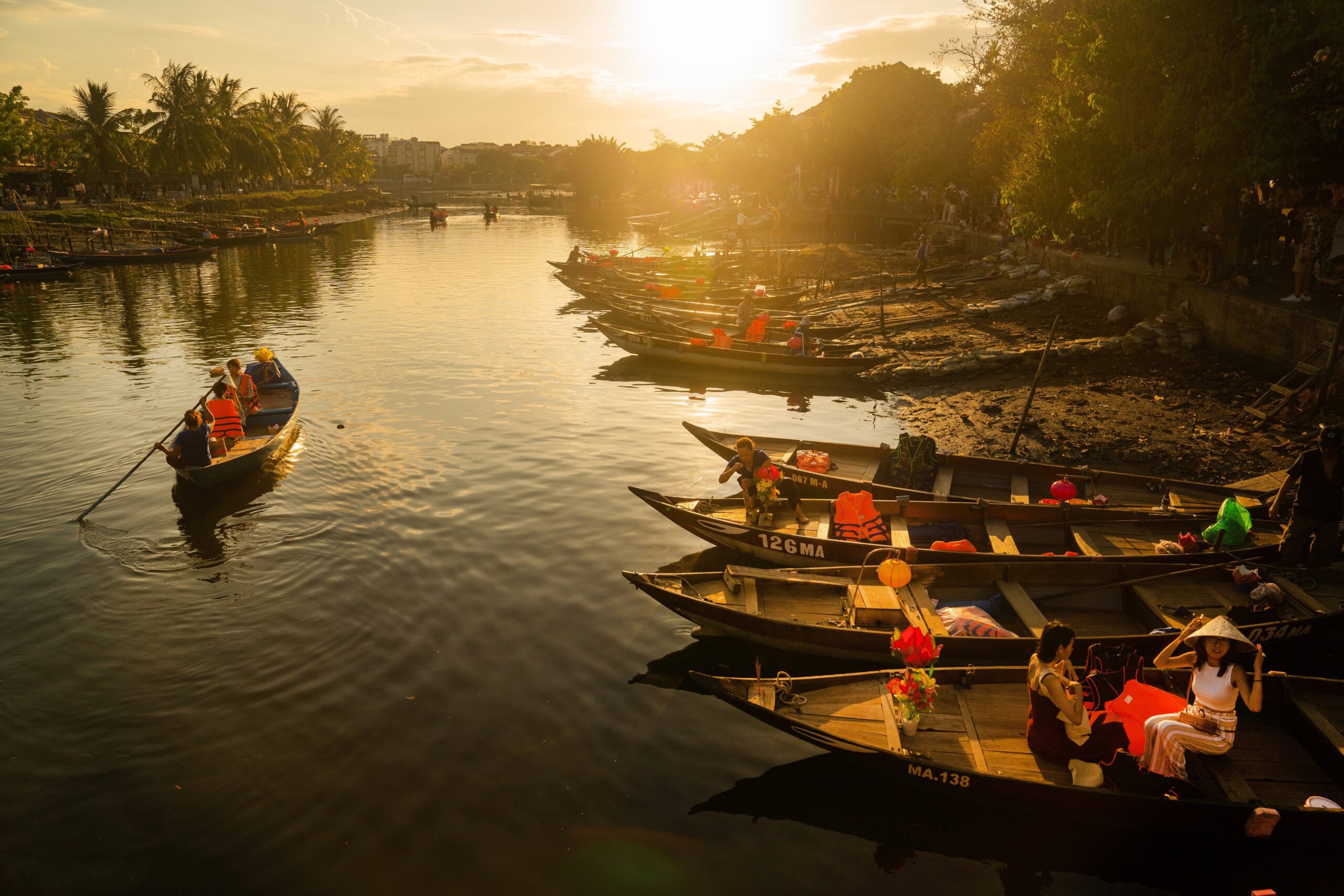
Table of Contents
- Why 10 Days Is the Perfect Vietnam Budget Itinerary Length
- The Route: North to South vs South to North
- 10 Days Vietnam Budget Itinerary: Overview and Costs at a Glance
- Day 1–2: Hanoi — The Capital That Never Sleeps
- Day 3–4: Ha Long Bay — The Non-Negotiable
- Day 5: Hue — Imperial Capital and Food Paradise
- Day 6: Hoi An — The Most Beautiful Town in Vietnam
- Day 7: Da Nang — Beach Day and Marble Mountains
- Day 8: Da Nang to Ho Chi Minh City — Transition Day
- Day 9–10: Ho Chi Minh City — Vietnam’s Electric South
- The Complete 10-Day Vietnam Budget Cost Breakdown
- 10 Days Vietnam Budget Itinerary: Transport Between Cities
- What to Pack for a 10-Day Vietnam Budget Itinerary
- 10 Days Vietnam Budget Itinerary: Practical Tips
- Frequently Asked Questions
1. Why 10 Days Is the Perfect Vietnam Budget Itinerary Length {#why}
A 10 days in Vietnam budget itinerary is the sweet spot between seeing too little and spending too much on transport.
Vietnam is 1,650 kilometers from top to bottom — the distance from London to Istanbul, or New York to Miami. That length means the country rewards deliberate itinerary planning more than almost any other Southeast Asian destination. Too few days and you skim the surface. Too many stops and you spend your budget on internal flights chasing your own tail.
Ten days, planned correctly, gives you the full north-to-south experience of Vietnam — the chaos and coffee culture of Hanoi, the limestone karsts of Ha Long Bay, the imperial grandeur of Hue, the lantern-lit beauty of Hoi An, the beach energy of Da Nang, and the relentless momentum of Ho Chi Minh City.
I have done this route three times — once in 8 days (too rushed), once in 14 days (ideal but not everyone has that time), and once in exactly 10 days (the version in this guide). The 10 days Vietnam budget itinerary in this post is the optimized version — every overnight bus used strategically to save accommodation costs, every meal eaten at local prices, every city given exactly the right amount of time.
Total in-country cost for this 10 days Vietnam budget itinerary: $547. That is accommodation, food, all transport, all activities, SIM card, travel insurance, and every Vietnamese coffee I drank — which was many.
According to Vietnam’s National Administration of Tourism, Vietnam receives over 18 million international visitors annually, with the north-to-south route being the most popular itinerary structure. The country’s extraordinary diversity — cultural, geographical, culinary — means that a well-planned 10 days Vietnam budget itinerary delivers more variety per dollar than almost any comparable route in Southeast Asia.
For the complete Vietnam budget context before diving into this itinerary, read our Vietnam Budget Travel Guide. For the broader Southeast Asia picture, our 3-week Southeast Asia trip under $1,500 guide shows how this Vietnam route fits into a larger regional itinerary.
2. The Route: North to South vs South to North {#route-direction}
Before building any 10 days Vietnam budget itinerary, the first decision is direction — north to south or south to north.
North to South: The Recommended Direction
This 10 days Vietnam budget itinerary runs north to south — Hanoi to Ho Chi Minh City. Here is why this direction works better for most budget travelers:
International flights: Most long-haul flights from Europe, North America, and Australia have better pricing into Hanoi than Ho Chi Minh City (or vice versa depending on origin). Check both — but Hanoi is the better starting point for this Vietnam budget itinerary because it anchors the Ha Long Bay excursion most efficiently.
Weather alignment: Flying north to south in the February–April window aligns with improving weather as you move south — dry in the north, dry season arriving in the center and south. The reverse is true in October–December. Check Vietnam’s regional weather patterns before finalizing your 10 days Vietnam budget itinerary direction.
Psychological momentum: Starting in Hanoi’s controlled chaos and ending in Ho Chi Minh City’s amplified version of it gives the Vietnam budget itinerary a satisfying sense of escalation. The country gets faster, hotter, and more energetic as you move south — a natural narrative arc.
South to North: When It Makes Sense
If your international flight is significantly cheaper into Ho Chi Minh City, run this 10 days Vietnam budget itinerary in reverse. The experience is equally valid — and the final arrival in Hanoi, with its more measured pace after HCMC’s intensity, has its own appeal.
3. 10 Days Vietnam Budget Itinerary: Overview and Costs at a Glance {#overview}
Here is the complete 10 days Vietnam budget itinerary at a glance before the day-by-day detail:
| Day | Location | Accommodation | Daily Budget |
|---|---|---|---|
| 1–2 | Hanoi | $10/night guesthouse | $28–35/day |
| 3–4 | Ha Long Bay | $0 (included in cruise) | $80/day (cruise amortized) |
| 5 | Hue | $10/night guesthouse | $25–32/day |
| 6 | Hoi An | $12/night guesthouse | $28–36/day |
| 7 | Da Nang | $11/night guesthouse | $26–33/day |
| 8 | Transit day | Overnight bus | $18–24 (bus saves hotel) |
| 9–10 | Ho Chi Minh City | $12/night guesthouse | $30–40/day |
Total in-country estimated budget: $490–590
The 10 days Vietnam budget itinerary costs are dominated by Ha Long Bay (unavoidable and worth every dollar) and Ho Chi Minh City (slightly more expensive than northern Vietnam). Every other stop comes in at $25–36/day — comfortably within the Vietnam budget travel sweet spot.
4. Day 1–2: Hanoi — The Capital That Never Sleeps {#hanoi}
Why Hanoi Earns 2 Days in the Vietnam Budget Itinerary
Hanoi is one of Asia’s great capital cities — and one of its most misunderstood. First-time visitors often describe it as chaotic, confusing, and overwhelming. Return visitors describe it as one of the most addictive cities on earth. The difference is time — Hanoi rewards the traveler who slows down enough to let the city reveal itself.
Two days in this 10 days Vietnam budget itinerary is the minimum for Hanoi. Use them well.
Day 1: Hanoi Arrival and Old Quarter Immersion
Morning — Arrival and Check-In
Most international flights arrive at Noi Bai International Airport (HAN), 30km north of the city center. The Vietnam budget itinerary airport transport options:
- 86 Airport Bus: 45,000 VND ($1.80) to the Old Quarter — the cheapest option, drops you near Hoan Kiem Lake
- Grab car: Fixed price $8–12 depending on destination in central Hanoi — use when arriving with luggage or late at night
- Minibus shuttles: 60,000–80,000 VND ($2.40–3.20) from the airport — good middle ground
Check in to your guesthouse in the Old Quarter (Hoan Kiem district) — the ideal base for this 10 days Vietnam budget itinerary. Budget guesthouses here run $9–13/night for private rooms with air conditioning.
Afternoon — Old Quarter Walking
The 36 ancient trading streets of Hanoi’s Old Quarter are the first great sensory experience of any Vietnam budget itinerary. Each street historically specialized in one trade — Hang Bac (silver), Hang Ma (paper offerings), Hang Gai (silk) — and traces of those specializations remain visible in the shop fronts.
Walk without a map. Get lost deliberately. Every lane reveals something — a neighborhood temple, a street food cart, a barber with his chair on the pavement, an alley that opens into a courtyard containing a 400-year-old banyan tree.
Evening — Hoan Kiem Lake and Egg Coffee
Hoan Kiem Lake at dusk — the red Huc Bridge, Ngoc Son Temple on its island, the lake reflecting the surrounding trees — is Hanoi at its most beautiful and its most free. Walk the perimeter, watch the city decompress around the water, and then find a traditional Hanoi egg coffee café.
Egg coffee (ca phe trung) is Hanoi’s most distinctive contribution to the world of coffee — a strong Vietnamese robusta base topped with a thick, sweet foam made from beaten egg yolks and condensed milk. At the traditional cafés (Giang Café on Nguyen Huu Huan Street is the original), it costs 30,000–45,000 VND ($1.20–1.80) and tastes unlike anything else on earth.
Day 1 Budget: ~$28
- Airport bus: $1.80
- Guesthouse: $10
- Pho breakfast: $2.10
- Lunch: Bun cha at local restaurant: $2.50
- Old Quarter walk: $0
- Egg coffee ×2: $3.00
- Dinner: Banh cuon + bia hoi beer at street stall: $3.50
- Snacks and water: $2.10
- Hoan Kiem Lake walk: $0
Day 2: Hanoi History and Culture
Morning — Ho Chi Minh Complex
The Ho Chi Minh Mausoleum complex — the mausoleum itself (where Ho Chi Minh’s embalmed body lies in state), the Presidential Palace, the stilt house where Ho Chi Minh lived, and the Ho Chi Minh Museum — is the single most historically significant site in Hanoi and one of the most important in Vietnam.
Entry to the mausoleum grounds is free. The mausoleum itself requires proper dress (covered shoulders and knees), no photography inside, and respectful silence. The surrounding gardens and historic buildings are open to walk freely.
Mid-Morning — Temple of Literature
Vietnam’s first university, founded in 1070 — five beautiful courtyards of Confucian architecture, stone steles listing the names of doctoral graduates from centuries past, and a calm that feels extraordinary inside a major city. Entry: 30,000 VND ($1.20). One of the most underrated stops in any 10 days Vietnam budget itinerary.
Afternoon — Vietnamese Women’s Museum or Vietnam Museum of Ethnology
Two of Hanoi’s finest museums for the Vietnam budget itinerary:
- Vietnamese Women’s Museum: 40,000 VND ($1.60) — the history of Vietnamese women through war, resistance, and daily life. Extraordinary collection, under-visited.
- Vietnam Museum of Ethnology: 40,000 VND ($1.60) — the most comprehensive collection of artifacts from Vietnam’s 54 ethnic minority groups. One of the best ethnographic museums in Southeast Asia.
Evening — Bia Hoi Corner and Night Market
Bia hoi — draft beer brewed fresh daily and served at plastic-stool street corners for 5,000–10,000 VND ($0.20–0.40) per glass — is the definitive Hanoi evening ritual. The corner of Ta Hien and Luong Ngoc Quyen in the Old Quarter is the most famous bia hoi junction in the city. Arrive at 6pm, order repeatedly, watch Hanoi’s evening unfold.
The Hanoi Night Market runs along Hang Dao Street on Friday, Saturday, and Sunday evenings — clothing, street food, souvenirs, and the full energy of Hanoi’s commercial culture at its most concentrated.
Day 2 Budget: ~$30
- Guesthouse: $10
- Breakfast: Banh mi from street cart: $1.00
- Ho Chi Minh Complex: $0
- Temple of Literature: $1.20
- Museum entry: $1.60
- Lunch: Bun bo Hue at local restaurant: $2.80
- Grab to Museum of Ethnology + back: $4.50
- Dinner: Bun cha Obama + spring rolls: $3.50
- Bia hoi ×4: $1.60
- Snacks and water: $2.30
- Night Market browsing: $1.50 (snacks)
5. Day 3–4: Ha Long Bay — The Non-Negotiable {#halong}
Why Ha Long Bay Is Essential to Any Vietnam Budget Itinerary
No 10 days Vietnam budget itinerary is complete without Ha Long Bay. This is the non-negotiable stop — the UNESCO World Heritage limestone karst seascape that is genuinely one of the world’s great natural wonders.
Nearly 2,000 limestone islands rise from jade-green water across 1,500 square kilometers of the Gulf of Tonkin. At sunrise, with mist between the karsts and absolute silence before the day boats arrive, it is the most spectacular natural landscape in Vietnam.
For this 10 days Vietnam budget itinerary, Ha Long Bay is Days 3 and 4 — a 2-night budget cruise that departs Hanoi on the morning of Day 3 and returns on the afternoon of Day 4.
The budget cruise recommendation for this Vietnam itinerary: Book a 2-night cruise in the $130–180 price range. This covers private cabin, all 5 meals, kayaking, cave exploration, squid fishing, and round-trip transfer from Hanoi. For the complete guide to finding the best deal, read our dedicated Ha Long Bay Budget Cruise guide.
Book at least 2 weeks before arrival. The best budget cruise operators at this price point sell out — waiting until you reach Hanoi significantly limits your options and often pushes you to more expensive operators or lower-quality boats.
Day 3: Departure and First Night on the Bay
The cruise transfer departs central Hanoi hotels at 7:30–8:30am — a 3.5–4 hour drive to the Tuan Chau or Ha Long City pier. Board the boat at noon, eat lunch as you cruise into the bay, and spend the afternoon kayaking through floating fishing villages and cave systems.
The cave exploration (typically Thien Cung or Sung Sot — “Amazing Cave” — on most budget cruise itineraries) takes 45–60 minutes and is genuinely extraordinary — cathedral-sized caverns with stalactites and stalagmites lit by colored lighting.
Evening: fresh seafood dinner on the boat deck, squid fishing off the stern after dark, and the bay at night — stars overhead, bioluminescent plankton glowing in the water when you trail your hand over the side, the silhouettes of karsts in every direction.
Photography tip for the Ha Long Bay section of this Vietnam budget itinerary: Stay on deck until midnight. The bay at night is one of the most photographed and least-seen spectacles in Vietnam — most passengers go to sleep after dinner. See our photography tips and navigating local transport guide for the specific low-light techniques that work on the water.
Day 4: Sunrise, Final Kayaking, Return to Hanoi
Wake at 5:45am. Make coffee. Go to the top deck.
The Ha Long Bay sunrise is the defining 45 minutes of this 10 days Vietnam budget itinerary. Mist rolling between the karsts, the water shifting from black to grey to green as the light increases, fishing boats appearing from nowhere in the early morning. No photograph fully captures it. You simply have to be there.
After breakfast, a final kayaking session through a flooded cave or between close-set karsts, then the boat returns to dock by noon. The transfer back to Hanoi arrives by 4–5pm.
Day 3–4 Ha Long Bay Budget: $159 (2-night cruise, all-inclusive)
- Round-trip transfer from Hanoi: included
- 2 nights accommodation (private cabin): included
- 5 meals (all seafood-focused): included
- Kayaking ×2: included
- Cave entry: included
- Beer on board (×6 total): $12
- Tip for guide and crew: $10
Total Ha Long Bay spend: $181
6. Day 5: Hue — Imperial Capital and Food Paradise {#hue}
Getting from Hanoi to Hue
After returning from Ha Long Bay on Day 4 afternoon, the 10 days Vietnam budget itinerary moves south. The overnight sleeper train from Hanoi to Hue departs at 7:30pm and arrives at 12:30pm the following day — a 17-hour journey that serves as both transport and accommodation.
Overnight train booking: Book the SE1 or SE3 train (the faster expresses) in a 6-berth soft sleeper cabin. Cost: 370,000–450,000 VND ($14.50–17.70) depending on berth position. Book at Vietnam Railways or through your Hanoi guesthouse 1–2 weeks ahead for this Vietnam budget itinerary leg.
The Hanoi–Hue train passes through some of Vietnam’s most dramatic scenery — particularly the Hai Van Pass coastal section in the early morning, where the track clings to cliffsides above the South China Sea. This is the section that Anthony Bourdain called “one of the most beautiful train rides in the world.”
Hue: The Imperial City
Hue was Vietnam’s imperial capital from 1802 to 1945 and its history is visible in every direction — the Citadel and Imperial City complex on the north bank of the Perfume River, the royal tombs scattered across the hillsides to the south, the ancient Thien Mu Pagoda watching the river from its promontory.
For this 10 days Vietnam budget itinerary, Hue gets one full afternoon and evening (arriving Day 5 around noon) — tight but enough for the essential experiences if used efficiently.
Afternoon — Imperial Citadel and Forbidden Purple City
The Imperial Citadel (80,000 VND / $3.15 entry) is Hue’s central attraction — a walled city within a walled city, modeled on Beijing’s Forbidden City and built between 1804 and 1833. The outer walls enclose the Imperial City; within that, the Forbidden Purple City (now largely ruins after the 1968 Tet Offensive) contains the most intimate and atmospheric spaces.
Allow 2–3 hours. Hire an audio guide (included in entry price since 2023) for context — the history of the Nguyen Dynasty that built and inhabited this complex rewards knowledge.
Evening — Hue Street Food Tour
Hue has the most distinctive and sophisticated regional cuisine in Vietnam — and the 10 days Vietnam budget itinerary evening in Hue should be dedicated entirely to eating.
The essential Hue street food dishes:
- Bun bo Hue: The city’s signature noodle soup — a spicy, lemongrass-infused beef broth with thick round noodles and braised beef. More complex and more interesting than Hanoi’s pho. Cost: 30,000–50,000 VND ($1.20–2.00)
- Banh khoai: A crispy crepe filled with shrimp, pork, and bean sprouts, dipped in fermented peanut sauce. One of Vietnam’s great street snacks. Cost: 15,000–25,000 VND ($0.60–1.00)
- Com hen: Tiny baby clams on cold rice with peanuts, chili oil, crispy pork rinds, and herb garnishes. Breakfast food technically — available from street vendors from 6am. Cost: 20,000–35,000 VND ($0.80–1.40)
Day 5 Budget: ~$45
- Overnight train Hanoi → Hue (booked Day 4 evening): $16
- Guesthouse Hue (1 night): $10
- Lunch: Bun bo Hue from local shop: $1.80
- Imperial Citadel entry: $3.15
- Afternoon street food exploration: $4.50
- Dinner: Full Hue street food spread: $5.20
- Grab from station to guesthouse: $2.50
- Snacks and water: $1.85
7. Day 6: Hoi An — The Most Beautiful Town in Vietnam {#hoian}
Getting from Hue to Hoi An
The 130km journey from Hue to Hoi An offers one of the most scenic road trips in this 10 days Vietnam budget itinerary — the route crosses the Hai Van Pass (even if the bus uses the tunnel, hire a motorbike taxi to ride the pass separately for $8–10) before descending to Da Nang and continuing to Hoi An.
Transport options for this Vietnam budget itinerary leg:
- Shared minivan (recommended): 100,000–150,000 VND ($3.95–5.90) for a 3.5-hour direct transfer. Book through your guesthouse the evening before.
- Local bus via Da Nang: 60,000 VND ($2.40) total but requires two bus changes and takes 4–5 hours.
- The Sinh Tourist bus: 120,000–160,000 VND ($4.75–6.30) with hotel pickup.
Hoi An: The Lantern Town
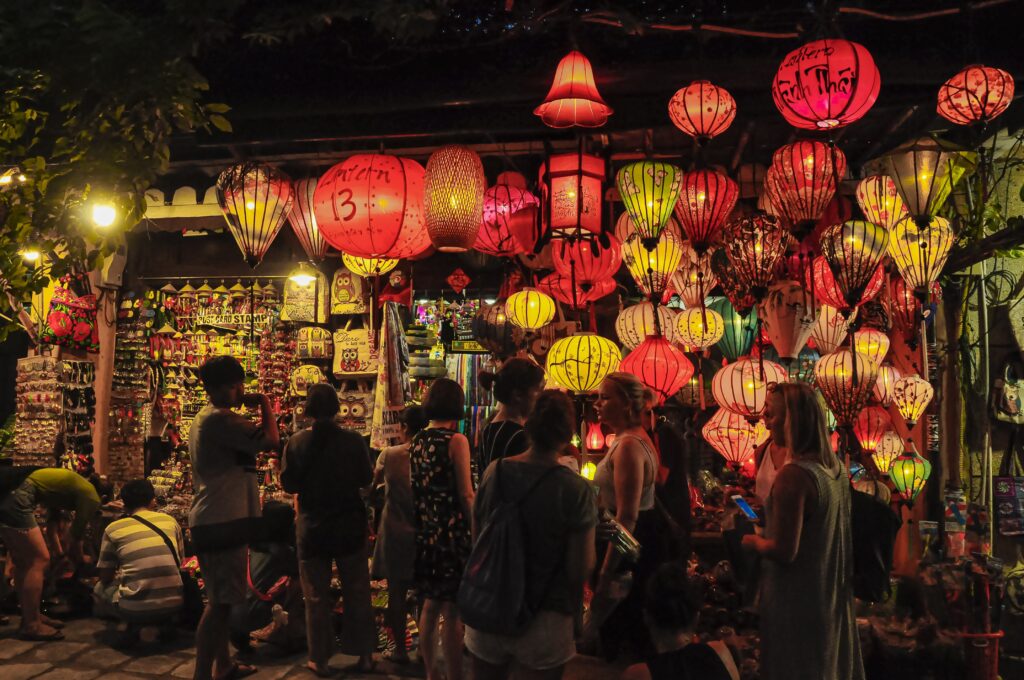
Hoi An’s Ancient Town is a UNESCO World Heritage Site — 30 blocks of extraordinarily well-preserved 15th–19th century trading port architecture, Japanese covered bridges, Chinese assembly halls, and French colonial shophouses. In the evening, when hundreds of silk lanterns illuminate the streets and the Thu Bon River reflects the glow, it is the most beautiful urban scene in Vietnam.
For this 10 days Vietnam budget itinerary, Hoi An gets one full day — enough for the essential Ancient Town experiences, the tailoring culture, and the extraordinary food.
Morning — Ancient Town Exploration
The Ancient Town entry pass costs 120,000 VND ($4.75) for 5 site tickets — choose from the Japanese Covered Bridge, Fujian Chinese Assembly Hall, Tan Ky Old House, Museum of Trade Ceramics, and several others. The streets themselves are free to walk; the pass covers interior access to specific historic buildings.
The Hoi An budget photography tip for this Vietnam itinerary: The Ancient Town is most beautiful in two windows — early morning (6:30–8am, before the day-trippers arrive from Da Nang) and evening (5:30–8pm, when the lanterns light up and the tourist buses have left). Plan your visit around these windows for the photographs and the experience.
Afternoon — Bicycle to An Bang Beach
Rent a bicycle (30,000–50,000 VND / $1.20–2.00/day from any guesthouse) and cycle 4km to An Bang Beach — Hoi An’s best and least crowded beach. The ride through rice paddies and vegetable gardens is itself one of the best experiences in this 10 days Vietnam budget itinerary. Swim, eat fresh seafood at the beach-side restaurants (200,000–350,000 VND / $7.90–13.80 for a full seafood grill — a worthy splurge), and cycle back for sunset.
Evening — Hoi An Night Market and Lanterns
The Hoi An Night Market on An Hoi Island (connected by the footbridge from the Ancient Town) runs every evening with street food, silk lanterns, and the river views that make Hoi An’s reputation. Buy a floating lantern (20,000 VND / $0.80), light it on the Thu Bon River, and watch it drift downstream with a hundred others.
The best budget food in Hoi An for this Vietnam itinerary:
- Cao lau: The dish that can only be authentic in Hoi An — thick noodles, char siu pork, crispy croutons, herbs, and a light broth. Only authentic here because the noodles are made with water from a specific local well. 40,000–70,000 VND ($1.60–2.75)
- White Rose dumplings (banh bao vac): Delicate shrimp-filled rice flour dumplings at Mrs. Thanh’s on Hai Ba Trung Street — 30,000–45,000 VND ($1.20–1.80)
- Banh mi Phuong: Widely considered Vietnam’s finest banh mi. 30,000–40,000 VND ($1.20–1.60) for a sandwich that has been called the world’s best by Anthony Bourdain
Day 6 Budget: ~$38
- Shared minivan Hue → Hoi An: $5.50
- Guesthouse Hoi An: $12
- Breakfast: Cao lau from market stall: $1.80
- Ancient Town entry pass: $4.75
- Bicycle rental: $1.60
- Lunch: White Rose dumplings + com ga: $3.50
- An Bang Beach afternoon: $0
- Dinner: Night market spread + floating lantern: $5.80
- Banh mi Phuong ×2: $3.20
- Snacks and water: $1.85
8. Day 7: Da Nang — Beach Day and Marble Mountains {#danang}
Why Da Nang Earns a Day in the Vietnam Budget Itinerary
Da Nang often gets dismissed in 10 days Vietnam budget itineraries as just a transit point between Hoi An and the south. That undersells it. Da Nang has My Khe Beach — one of Asia’s finest — the Marble Mountains, the Ba Na Hills cable car experience, and a street food scene that reflects its position as Vietnam’s most rapidly developing city.
One full day here in the Vietnam budget itinerary is exactly right.
Getting from Hoi An to Da Nang
Grab from Hoi An Ancient Town to Da Nang city center: 150,000–200,000 VND ($5.90–7.90), approximately 30 minutes. Local bus: 25,000 VND ($1.00), approximately 50 minutes with a transfer at the Da Nang bus station.
Da Nang: Beach, Mountains and Street Food
Morning — Marble Mountains
Five marble and limestone hills rising from the coastal plain 9km south of Da Nang city center — each named after one of the five elements (Water, Wood, Fire, Metal, Earth). The largest, Thuy Son (Water Mountain), contains Buddhist sanctuaries built into cave systems within the marble, accessible via stone staircases.
Entry: 40,000 VND ($1.60). Elevator to the summit (optional): 15,000 VND ($0.60).
The caves within the marble are extraordinary — Buddhist altars in caverns where shafts of natural light pierce through holes in the rock ceiling. The view from the summit takes in the full sweep of My Khe Beach, Da Nang city, and the Hai Van Pass on the northern horizon.
Afternoon — My Khe Beach
Forbes listed My Khe as one of the world’s most beautiful beaches. It is 30km of white sand, warm water, and (compared to Thailand’s famous beaches) very few tourists. The Vietnam budget itinerary afternoon here: swim, lie in the sun, eat grilled seafood from the beach-side restaurants (100,000–200,000 VND / $3.95–7.90 for a full grill — one of the best budget beach eating experiences in Southeast Asia), and watch the South China Sea turn golden in the afternoon light.
Evening — Con Market and Da Nang Street Food
Con Market (Cho Con) is Da Nang’s largest covered market — the city’s culinary center, where local families eat breakfast and lunch at stalls serving mi quang, banh canh, and bun mam. In the evening, the surrounding streets come alive with grilled meat skewers, seafood, and the specific Da Nang street food that does not appear in most Vietnam budget itinerary guides:
- Mi Quang: Da Nang’s signature turmeric-yellow noodle dish with shrimp, pork, quail eggs, peanuts, and rice crackers. 30,000–50,000 VND ($1.20–2.00)
- Banh xeo: Sizzling crispy crepes filled with shrimp and bean sprouts, eaten wrapped in rice paper and herbs. 30,000–50,000 VND ($1.20–2.00)
Day 7 Budget: ~$33
- Guesthouse Da Nang (near My Khe Beach): $11
- Grab Hoi An → Da Nang: $7.00
- Breakfast: Mi quang from local stall: $1.60
- Marble Mountains entry: $1.60
- Grab to Marble Mountains + back: $5.00
- Lunch: Beach seafood grill: $5.50
- My Khe Beach afternoon: $0
- Dinner: Con Market street food: $4.20
- Snacks, coconut water, iced coffee: $2.10
9. Day 8: Da Nang to Ho Chi Minh City — Transition Day {#transition}
The Overnight Bus Strategy for This Vietnam Budget Itinerary
Day 8 in this 10 days Vietnam budget itinerary is the strategic transit day — and the way you handle it determines whether you arrive in Ho Chi Minh City fresh or exhausted, and whether you stay within budget or exceed it.
The Da Nang to Ho Chi Minh City distance is 935km — too far for a comfortable day bus and the wrong route for a scenic train journey. The Vietnam budget itinerary solution: the overnight sleeper bus.
Da Nang to Ho Chi Minh City overnight sleeper bus:
- Operator: Futa Bus Lines (most reliable) or Phuong Trang
- Departure: 8:00pm – 9:00pm from Da Nang
- Arrival: 7:00am – 8:00am Ho Chi Minh City
- Cost: 250,000–320,000 VND ($9.85–12.60)
- Comfort: Reclining pod-style seats that fully flatten — genuinely comfortable for sleeping
The budget genius of this approach: The overnight bus costs $10–13 and saves a night of accommodation ($11–14) — net cost of transit: approximately $0, while also covering 935km. This is why overnight transport is one of the core strategies in our 31 budget travel tips guide.
Day 8 in Da Nang (before the bus): Spend the morning at a rooftop café watching Da Nang wake up (Vietnamese iced coffee: 25,000–35,000 VND / $1.00–1.40). Visit the Dragon Bridge (free — most dramatic at night when it breathes fire on weekends, but interesting by day). Eat one final Da Nang lunch at Con Market. Check out, store bags at your guesthouse (most will hold bags free of charge), and pick them up before the evening bus.
Day 8 Budget: ~$22
- Da Nang morning (last night guesthouse checkout): $0
- Breakfast + Vietnamese coffee: $2.20
- Dragon Bridge walk: $0
- Lunch: Full Con Market meal: $2.80
- Afternoon café + snacks: $3.50
- Overnight bus Da Nang → HCMC: $11.00
- Miscellaneous: $2.50
10. Day 9–10: Ho Chi Minh City — Vietnam’s Electric South {#hcmc}
Ho Chi Minh City in the Vietnam Budget Itinerary
Ho Chi Minh City (Saigon) is the exclamation point at the end of this 10 days Vietnam budget itinerary — the most energetic, most ambitious, most relentlessly forward-moving city in Vietnam. After 8 days of relative calm (Hanoi, Ha Long Bay, Hue, Hoi An, Da Nang), the arrival into HCMC’s morning rush hour feels like turning up the volume on everything.
The overnight bus arrives at the Mien Dong bus station in District 9 — take a Grab into District 1 (central) for 80,000–120,000 VND ($3.15–4.75). Check in early if your guesthouse allows (most will), leave bags, and begin immediately.
Day 9: War History and City Energy
Morning — War Remnants Museum
The most visited museum in Vietnam — and the most emotionally challenging entry in this 10 days Vietnam budget itinerary. The War Remnants Museum documents the American War (as Vietnamese call it) through photographs, artifacts, and personal testimonies of extraordinary power.
Entry: 40,000 VND ($1.60). Allow 2 hours minimum. The photography exhibitions on the upper floors — images by photographers from both sides of the conflict — are among the most significant photographic archives in Southeast Asia.
Go in the morning when you have full emotional and cognitive energy. Do not rush this.
Afternoon — Reunification Palace
The former Presidential Palace of South Vietnam — frozen architecturally in 1975, when North Vietnamese tanks crashed through its gates to end the war — is one of the great time-capsule buildings in Asia. The war rooms in the basement, the rooftop helipad, and the period-furnished state rooms are all included in the 40,000 VND ($1.60) entry fee.
Evening — Ben Thanh Market and Bui Vien Street
Ben Thanh Market is tourist-facing but atmospheric — the surrounding streets are where the real food action happens in this Vietnam budget itinerary. Bui Vien Walking Street (District 1’s backpacker strip) is loud, cheerful, and not representative of HCMC — but worth 30 minutes of experiencing before retreating to the side streets for dinner.
The HCMC budget food strategy for this Vietnam itinerary:
- Banh mi Huynh Hoa: The city’s most famous banh mi shop, on Le Thi Rieng Street. Packed with fillings, served from 2pm, queues from 6pm. 30,000 VND ($1.20). The best banh mi in Ho Chi Minh City.
- Com tam: Broken rice with grilled pork, fried egg, and pickled vegetables — HCMC’s working breakfast (and lunch, and dinner). 35,000–55,000 VND ($1.40–2.20) at any local com tam shop.
- Hu tieu: Clear noodle soup with pork, prawns, and herbs — HCMC’s answer to Hanoi’s pho. 35,000–55,000 VND ($1.40–2.20).
Day 9 Budget: ~$38
- Guesthouse HCMC (2 nights): $12/night shown here
- Breakfast: Com tam from street stall: $1.80
- Grab from bus station: $4.00
- War Remnants Museum: $1.60
- Reunification Palace: $1.60
- Lunch: Banh mi Huynh Hoa ×2 + iced coffee: $3.80
- Ben Thanh area walk: $0
- Dinner: Full HCMC street food spread: $5.50
- Bui Vien beer ×2: $3.00
- Snacks and water: $2.70
Day 10: Cu Chi Tunnels and Final Farewell
Morning — Cu Chi Tunnels
The Cu Chi Tunnels — 250 kilometers of underground tunnels used by Viet Cong fighters during the Vietnam War — are the most compelling and most visceral historical experience in this 10 days Vietnam budget itinerary. Located 40km northwest of HCMC, the tunnel complex includes widened tunnel sections you can crawl through, bomb craters, booby trap demonstrations, and an extraordinary atmosphere of compressed history.
Getting to Cu Chi on a Vietnam budget:
- Local bus: Bus 13 from Ben Thanh Market to Cu Chi town (30,000 VND / $1.20), then local bus or xe om to the tunnels. Total: 60,000–80,000 VND ($2.40–3.15). 2–3 hours each way.
- Shared tour (recommended for time efficiency): 150,000–200,000 VND ($5.90–7.90) from any HCMC guesthouse. Half-day, includes transfer and guide.
Entry to Cu Chi Tunnels: 110,000 VND ($4.35).
Afternoon — Jade Emperor Pagoda and Final Wander
The Jade Emperor Pagoda (Phuoc Hai Tu) on Mai Thi Luu Street is HCMC’s most atmospheric and most genuine temple — worshippers burning incense, fortune tellers in the courtyard, tortoise tanks in the gardens, and elaborate Taoist and Buddhist iconography throughout. Free entry, donations appreciated.
The final afternoon of this 10 days Vietnam budget itinerary belongs to wandering — District 1’s French colonial streetscapes, the Nguyen Hue Walking Street and its fountain, a final Vietnamese coffee at a sidewalk plastic-stool café, one more bowl of pho from a cart that has been in the same spot for decades.
Evening — Final Dinner
Spend the last meal of this 10 days Vietnam budget itinerary on the best food you can find for $5. In HCMC, that means: either the full com tam plate at the local shop 3 streets from your guesthouse, or a bowl of hu tieu from the cart on the corner that sets up at 6pm and sells out by 9pm. Both are better than the tourist restaurant on the main road. Both cost under $2.50.
Day 10 Budget: ~$35
- Guesthouse: $12
- Breakfast: Banh mi + Vietnamese iced coffee: $2.20
- Shared Cu Chi Tunnels tour: $7.00
- Cu Chi Tunnels entry: $4.35
- Lunch at Cu Chi: $2.50
- Jade Emperor Pagoda: $0
- Final afternoon walk and coffee: $2.50
- Farewell dinner: full Vietnamese spread: $5.45
- Grab to airport or bus station: $4.00
- Snacks and water: $2.00
11. The Complete 10-Day Vietnam Budget Cost Breakdown {#breakdown}
Here is every dollar of this 10 days Vietnam budget itinerary — the complete honest accounting:
By Category
| Category | Total Cost | Per Day |
|---|---|---|
| Accommodation (8 nights — 2 on Ha Long Bay cruise) | $98 | $9.80 |
| Food (10 days) | $112 | $11.20 |
| Transport (all internal moves) | $87 | $8.70 |
| Activities and entrance fees | $87 | $8.70 |
| Ha Long Bay cruise (2 nights, all-inclusive) | $181 | $18.10 |
| Travel insurance (SafetyWing, 10 days) | $15 | $1.50 |
| Vietnam e-visa | $25 | — |
| SIM card (Viettel, 30 days data) | $5 | — |
| Miscellaneous (laundry, tips, toiletries) | $35 | $3.50 |
| GRAND TOTAL | $645 | $64.50 |
Removing fixed costs (Ha Long Bay cruise $181, e-visa $25, insurance $15, SIM $5): in-country daily average = $41.90/day
In-country only total (no Ha Long Bay cruise): $419 for 10 days = $41.90/day
By Day
| Day | Location | Daily Total |
|---|---|---|
| Day 1 | Hanoi | $28 |
| Day 2 | Hanoi | $30 |
| Day 3 | Ha Long Bay (cruise) | $181 total shown here* |
| Day 4 | Ha Long Bay (return) | — |
| Day 5 | Hue | $45 (includes overnight train) |
| Day 6 | Hoi An | $38 |
| Day 7 | Da Nang | $33 |
| Day 8 | Transit (overnight bus) | $22 |
| Day 9 | Ho Chi Minh City | $38 |
| Day 10 | Ho Chi Minh City | $35 |
*Ha Long Bay cruise covers 2 days accommodation, 5 meals, all activities
12. 10 Days Vietnam Budget Itinerary: Transport Between Cities {#transport}
Here is every transport move in this 10 days Vietnam budget itinerary with costs and booking guidance:
| Leg | Method | Cost | Book |
|---|---|---|---|
| Hanoi airport → Old Quarter | Airport bus 86 | $1.80 | On arrival |
| Hanoi → Ha Long Bay (cruise transfer) | Included in cruise | $0 | With cruise booking |
| Ha Long Bay → Hanoi (cruise return) | Included in cruise | $0 | — |
| Hanoi → Hue | Overnight sleeper train SE1/SE3 | $16 | Vietnam Railways 2 weeks ahead |
| Hue → Hoi An | Shared minivan | $5.50 | Through guesthouse |
| Hoi An → Da Nang | Grab or local bus | $1–7 | On demand |
| Da Nang → HCMC | Overnight sleeper bus (Futa) | $11 | Futa Bus 3–5 days ahead |
| HCMC bus station → District 1 | Grab car | $4 | On demand |
| HCMC local Grab rides | Grab (4 days) | $16 total | On demand |
| Total transport cost | $87 |
Transport Tips Specific to This Vietnam Budget Itinerary
Book the Ha Long Bay cruise first — at least 2 weeks before arrival in Hanoi. The best budget operators ($130–180 for 2 nights) sell out faster than any other element of this 10 days Vietnam budget itinerary. Read our dedicated Ha Long Bay Budget Cruise guide for the complete booking strategy.
Book the Hanoi–Hue overnight train 1–2 weeks ahead. Soft sleeper berths (6-berth cabin) fill up — particularly on the SE1 and SE3 express trains that complete the journey in 13 hours rather than 17.
The Futa Bus Da Nang → HCMC can be booked 3–5 days ahead safely outside of holiday periods. The 12Go Asia platform is the most reliable booking interface for Futa buses and covers all major Vietnam intercity routes for this Vietnam budget itinerary.
13. What to Pack for a 10-Day Vietnam Budget Itinerary {#packing}
A 10 days Vietnam budget itinerary requires specific packing considerations — the climate varies significantly from Hanoi (cooler, particularly in winter) to HCMC (hot and humid year-round), and the range of activities (city walking, Ha Long Bay kayaking, beach days, temple visits) demands versatile clothing.
The essentials for this Vietnam itinerary:
- Lightweight, quick-dry clothing ×3–4 tops: Vietnam is hot and laundry is cheap (25,000–40,000 VND / $1–1.60 per bag). Bring less than you think you need.
- Lightweight scarf or sarong: Temple dress codes throughout the itinerary require covered shoulders and knees. One lightweight scarf solves every situation.
- Rain jacket: Packable, lightweight — Vietnam’s afternoon rain can appear without warning at any point in the year.
- Swimwear: For Ha Long Bay kayaking and Da Nang’s My Khe Beach.
- Comfortable walking shoes: This itinerary involves significant daily walking — Hanoi’s Old Quarter, the Angkor Citadel, Hoi An’s streets, HCMC’s museum district.
- Dry bag: Essential for Ha Long Bay kayaking — protects your phone and camera during the cave paddles.
- Offline maps (Maps.me + Google Maps): Download Hanoi, Ha Long Bay, Hue, Hoi An, Da Nang, and Ho Chi Minh City offline maps before arrival.
For the complete packing strategy, read our packing tips and must-have travel apps guide. For the complete app toolkit for Vietnam, the Vietnam Budget Travel Guide includes the specific app recommendations for each city.
14. 10 Days Vietnam Budget Itinerary: Practical Tips {#practical}
Vietnam E-Visa
Most nationalities require a Vietnam e-visa — apply at the official Vietnam e-visa portal. Cost: $25 for 90 days (single or multiple entry). Processing: 3 business days. Apply before booking any flights — visa approval is required before some airlines allow check-in.
The 10 days Vietnam budget itinerary e-visa cost: $25, included in the total budget breakdown above.
Vietnam SIM Card
Get a Viettel or Vietnamobile SIM at Noi Bai Airport immediately on arrival in Hanoi — 120,000–180,000 VND ($4.75–7.10) for 30 days of data. Essential for Grab, Google Maps, and translation throughout this 10 days Vietnam budget itinerary.
Alternatively, Airalo eSIMs for Vietnam activate before you land — from $4.50 for 7 days of data.
Money in Vietnam
Vietnam uses the Vietnamese dong (VND). Approximate exchange rate: 25,000–25,500 VND to $1 USD.
ATM strategy for this Vietnam budget itinerary: Vietcombank and BIDV ATMs charge the lowest foreign withdrawal fees (33,000 VND / $1.30 per transaction). Withdraw 2,000,000–3,000,000 VND ($79–118) at a time to minimize per-transaction costs. Use a Wise card for mid-market rate conversions.
Never exchange currency at hotels or tourist areas — the rates are 5–10% worse than bank ATMs. The airport ATM rate is acceptable for an initial small withdrawal; exchange more at city center ATMs.
Health Preparation for Vietnam
- Hepatitis A and typhoid vaccinations recommended
- Malaria prophylaxis not required for the cities in this 10 days Vietnam budget itinerary (Hanoi, Hue, Hoi An, Da Nang, HCMC)
- Dengue fever present year-round — use DEET mosquito repellent at dawn and dusk
- Drink bottled water only — available everywhere for 5,000–10,000 VND ($0.20–0.40) per 500ml
Food Safety on this Vietnam Budget Itinerary
Vietnamese street food is extraordinarily safe by Southeast Asian standards — the turnover is high, the ingredients are fresh, and the cooking methods (high-heat wok, boiling broth) eliminate most pathogens. The Vietnam budget itinerary food rule: eat where locals eat, avoid pre-cooked food sitting out for long periods, and wash hands frequently.
The Vietnam Ministry of Health’s traveler guidance provides current food safety advisories for specific regions.
15. Frequently Asked Questions {#faq}
Is 10 days enough for Vietnam?
The honest 10 days Vietnam budget itinerary answer: 10 days is enough to see the essential highlights of north-to-south Vietnam — Hanoi, Ha Long Bay, Hue, Hoi An, Da Nang, and Ho Chi Minh City — without feeling rushed. It is not enough to explore off-the-beaten-path destinations (Sapa, Ninh Binh, Mui Ne, Phu Quoc) or to slow down and truly absorb each city. For those experiences, 14–21 days is the ideal Vietnam itinerary length. For a complete Vietnam travel context, read our Vietnam Budget Travel Guide.
How much does 10 days in Vietnam cost?
This 10 days Vietnam budget itinerary totals $645 all-in — including Vietnam e-visa ($25), Ha Long Bay cruise ($181), all accommodation, all food, all internal transport, and all activities. Removing fixed costs, the daily in-country average is $41.90. Budget travelers who skip Ha Long Bay (not recommended) or travel more slowly to reduce transport costs can bring the total below $500.
What is the best route for 10 days in Vietnam?
The 10 days Vietnam budget itinerary in this guide — Hanoi → Ha Long Bay → Hue → Hoi An → Da Nang → Ho Chi Minh City — is the most cost-effective and experientially balanced route for a first Vietnam visit. It covers all three main regions (north, central, south), uses overnight transport strategically to save accommodation costs, and allocates time proportionally to the richness of each destination.
Do I need to book everything in advance for a 10-day Vietnam budget itinerary?
Three bookings should be made before arriving in Vietnam: (1) Ha Long Bay cruise (2 weeks minimum — best budget operators sell out), (2) Hanoi–Hue overnight train (1–2 weeks — SE1 and SE3 sleeper berths fill up), and (3) Vietnam e-visa (apply 1 week before departure). Everything else — guesthouses, buses, activities — can be booked on arrival or 1–2 days ahead. The 10 days Vietnam budget itinerary is flexible by design; only the Ha Long Bay and train bookings require advance planning.
What is the best time of year for a 10-day Vietnam budget itinerary?
February–April is the optimal window for this 10 days Vietnam budget itinerary — dry season in the north (Hanoi, Ha Long Bay) and central Vietnam (Hue, Hoi An) simultaneously, with the south (HCMC) in dry season year-round. October–December is the second-best window, though central Vietnam receives significant rain in November. Avoid July–August in central Vietnam — the hottest, most humid period, with occasional typhoons. Check Vietnam’s regional weather guide for the most current seasonal data.
Quick Reference: 10 Days Vietnam Budget Itinerary
Day-by-Day Summary
| Day | City | Must-Do | Budget |
|---|---|---|---|
| 1 | Hanoi | Old Quarter walk + egg coffee | $28 |
| 2 | Hanoi | Ho Chi Minh Complex + bia hoi | $30 |
| 3 | Ha Long Bay | Kayaking + cave exploration | $181 (2-day cruise) |
| 4 | Ha Long Bay | Sunrise + return to Hanoi | — |
| 5 | Hue | Imperial Citadel + bun bo Hue | $45 |
| 6 | Hoi An | Ancient Town + cao lau + lanterns | $38 |
| 7 | Da Nang | Marble Mountains + My Khe Beach | $33 |
| 8 | Transit | Overnight bus to HCMC | $22 |
| 9 | Ho Chi Minh City | War Remnants Museum + banh mi | $38 |
| 10 | Ho Chi Minh City | Cu Chi Tunnels + farewell pho | $35 |
| TOTAL | $450 + $195 fixed costs = $645 |
This 10 days Vietnam budget itinerary is not a list of attractions. It is a story — from the egg coffee of Hanoi at dawn to the banh mi of Ho Chi Minh City at midnight, from the limestone karsts of Ha Long Bay to the lanterns of Hoi An reflected in the Thu Bon River.
Ten days. Six cities. One of the most extraordinary countries on earth. Under $650 from arrival to departure.
The e-visa takes 3 minutes to apply for. The flights are out there at the right price if you know how to find cheap flights. The 10 days Vietnam budget itinerary is planned and waiting.
Go.
Following this 10 days Vietnam budget itinerary in 2026? Drop your real costs, updated prices, and best finds in the comments — this guide is updated every 6 months with reader data.
Related Posts:
- Vietnam Budget Travel Guide: How Much Does Vietnam Really Cost?
- Ha Long Bay Budget Cruise: 7 Proven Ways to Find the Best Cheap Cruise
- How I Planned a 3-Week Trip to Southeast Asia for Under $1,500
- How to Find Cheap Flights: 12 Proven Strategies That Actually Work
- Packing Tips and Must-Have Travel Apps: The Ultimate Proven Guide
- Photography Tips and Navigating Local Transport
- Best Budget Travel Destinations in Southeast Asia: 12 Countries Ranked
- 31 Budget Travel Tips: Save Big and Travel More