
Table of Contents
- Why Vietnam Budget Travel Is the Best Decision You’ll Make
- How Much Does Vietnam Budget Travel Really Cost Per Day?
- Vietnam Budget Travel: City-by-City Cost Breakdown
- Where to Stay on a Vietnam Budget Travel Trip
- Vietnam Budget Travel Food Guide: Eat Like a King for $10
- Getting Around Vietnam on a Budget
- Best Experiences for Vietnam Budget Travelers
- 15 Proven Vietnam Budget Travel Tips That Actually Work
- Vietnam Budget Travel: North vs Central vs South
- My Full 30-Day Vietnam Budget Travel Cost Breakdown
- Frequently Asked Questions
1. Why Vietnam Budget Travel Is the Best Decision You’ll Make {#why}
Vietnam budget travel is not a compromise. It is one of the richest, most rewarding travel experiences on the planet — and it happens to cost almost nothing.
I spent 30 days traveling the length of Vietnam from Hanoi to Ho Chi Minh City. I ate extraordinary food at every meal. I slept in clean, comfortable guesthouses. I kayaked through UNESCO-listed bays, explored ancient imperial cities, and motorbike-looped through rice terraces that stretched to the horizon.
My total spend for 30 days: $1,108.
That is not a typo. Vietnam budget travel delivers a quality of experience that would cost 4–5 times more in Western Europe or Japan — and the food alone is worth the flight.
Vietnam stretches over 1,600 kilometers from north to south, and each region is a distinct world. Hanoi’s chaotic, coffee-shop-dense streets. Hoi An’s lantern-lit ancient town. The limestone karsts of Ha Long Bay and Phong Nha. The buzzing, tropical energy of Ho Chi Minh City. Vietnam budget travel gives you access to all of it at a price that makes longer stays not just possible but financially sensible.
According to Lonely Planet’s Vietnam overview, Vietnam consistently ranks among the top 5 budget travel destinations in Southeast Asia — and based on real spending, it deserves to be #1.
This is the complete, honest Vietnam budget travel guide for 2026 — real numbers, city-by-city breakdowns, and every tip that actually moves the needle.
2. How Much Does Vietnam Budget Travel Really Cost Per Day? {#daily-cost}
The most common question about Vietnam budget travel is: what does a day actually cost?
Here are three honest daily budget tiers:
Budget Tier: $25–35/day
- Accommodation: $8–12 (dorm or basic private room)
- Food: $7–9 (street food and local restaurants only)
- Transport: $2–3 (local buses, walking)
- Activities: $3–5 (1 paid activity or temple visit)
- Miscellaneous: $2–3
Who this suits: Backpackers, long-term travelers, those maximizing time over comfort.
Mid-Budget Tier: $40–60/day ✅ Most Travelers
- Accommodation: $15–20 (private guesthouse room or budget hotel)
- Food: $12–15 (mix of street food and sit-down restaurants)
- Transport: $4–6 (Grab, occasional taxi)
- Activities: $8–12 (2 paid activities per day)
- Miscellaneous: $4–5
Who this suits: Most Vietnam budget travelers — comfortable without overspending.
Comfort Budget Tier: $70–100/day
- Accommodation: $25–40 (boutique guesthouse or 3-star hotel)
- Food: $18–25 (restaurant meals with drinks)
- Transport: $8–10 (private transfers, Grab)
- Activities: $15–20 (tours, cooking classes, boat trips)
- Miscellaneous: $6–8
Who this suits: Travelers who want comfort with budget consciousness.
The honest average for most Vietnam budget travelers: $40–55/day including everything — accommodation, food, transport, activities, visas amortized, and the occasional splurge.
3. Vietnam Budget Travel: City-by-City Cost Breakdown {#city-breakdown}
Vietnam budget travel costs vary significantly by destination. Here is what each major stop actually costs:
Hanoi — $30–45/day
Vietnam’s capital is one of the best-value cities for budget travel in Vietnam.
The Old Quarter packs extraordinary density into a walkable area — 36 ancient trading streets, French colonial architecture, street food at every corner, and a coffee culture so strong that even the smallest alley has a café worth sitting in for an hour.
- Budget guesthouse (private room): $9–14/night
- Pho breakfast from street cart: $1.50–2.50
- Bun cha lunch (Obama’s famous dish): $2–3
- Egg coffee at a traditional café: $1.50
- Free activities: Hoan Kiem Lake, Ho Chi Minh Mausoleum, Old Quarter walking
Hanoi is the cheapest major city on any Vietnam budget travel itinerary.
Ha Long Bay — $130–200 (2-night cruise, all-inclusive)
Not a daily budget destination — Ha Long Bay is a 2–3 night cruise experience that is priced as a package. For the complete breakdown of how to find the best deal, see our full Ha Long Bay Budget Cruise Guide.
The key Vietnam budget travel point: a 2-night cruise at $130–180 all-inclusive (meals, kayaking, cave entry, Hanoi transfer) is one of the best value-for-experience propositions in Southeast Asia.
Hue — $25–38/day
Hue was Vietnam’s imperial capital and remains one of the country’s most atmospheric cities — and one of its most affordable for Vietnam budget travelers.
- Budget guesthouse: $8–12/night
- Bun bo Hue (the city’s signature spicy beef noodle soup): $1.50–2
- Imperial Citadel entry: $6
- Bicycle rental for a full day: $3
- Free activities: Thien Mu Pagoda, Truong Tien Bridge at sunset, Phu Cat market
Hue rewards slow travel. Three days here on a Vietnam budget travel trip costs under $100 including a guesthouse, all meals, and the major sites.
Hoi An — $35–50/day
The most beautiful town in Vietnam — and slightly more expensive than Hue for budget Vietnam travel because of its popularity. The ancient town itself is a UNESCO World Heritage Site; entry passes cost $5 for 5 sites.
- Budget guesthouse (Old Town or nearby): $12–18/night
- Cao Lau (Hoi An’s signature noodle dish, only authentic here): $2–3
- White Rose dumplings at Mrs. Thanh’s original restaurant: $2
- Bicycle rental: $2/day
- Cooking class (highly recommended): $25–35
Hoi An budget travel tip: Stay just outside the Old Town — 5 minutes by bicycle — and save $6–8/night while walking distance from everything.
Da Nang — $30–45/day
Vietnam’s fastest-growing city is a useful Vietnam budget travel hub between Hue and Hoi An — and has excellent beaches.
- Budget hotel near My Khe Beach: $12–16/night
- Mi Quang noodles from a local shop: $1.50
- Marble Mountains entry: $2
- Ba Na Hills cable car (worth the splurge): $35
- Free: My Khe Beach (one of Forbes’ top 6 beaches in Asia)
Ho Chi Minh City (Saigon) — $35–55/day
Vietnam’s largest city is more expensive than Hanoi but still extraordinary value for budget Vietnam travel. The energy is relentless — motorbikes, markets, rooftop bars, and French colonial buildings crumbling beautifully in the tropical heat.
- Budget guesthouse (District 1 or District 3): $12–18/night
- Banh mi from Huynh Hoa (the city’s most famous): $2
- Com tam (broken rice with grilled pork): $2–3
- Cu Chi Tunnels day trip: $15–20
- Free: Ben Thanh Market area, Nguyen Hue Walking Street, Jade Emperor Pagoda
4. Where to Stay on a Vietnam Budget Travel Trip {#accommodation}
Vietnam budget travel accommodation options are genuinely excellent at every price point.
Hostels ($5–10/night)
Vietnam has a strong hostel culture, particularly in Hanoi, Hoi An, and Ho Chi Minh City. Dorm beds are $5–8, with social atmospheres and often excellent free breakfasts. Good starting point for solo Vietnam budget travelers.
Budget Guesthouses ($9–18/night)
The backbone of Vietnam budget travel accommodation. Private rooms with air conditioning, hot shower, and often free breakfast for $9–15/night are standard across the country. Quality is consistently high at this price point — Vietnam’s guesthouse culture rewards the budget traveler.
Booking tip: Use Booking.com’s Genius loyalty program (free to join) for 10–15% off thousands of Vietnamese properties. For hostels, Hostelworld has the most comprehensive Vietnam inventory.
Mini Hotels ($15–25/night)
Vietnam’s ubiquitous “mini hotels” — family-run, 10–20 rooms, often with rooftop terraces — offer excellent value for Vietnam budget travel. Cleaner and quieter than hostels, more characterful than chains.
Book Direct When Possible
Many guesthouses offer 10–15% discounts for direct bookings (vs. Booking.com). Email or message ahead. For stays of 5+ nights, always ask for a weekly rate — discounts of 15–25% are common and never advertised.
5. Vietnam Budget Travel Food Guide: Eat Like a King for $10 {#food}
Food is the greatest argument for Vietnam budget travel. Vietnamese cuisine is extraordinary — complex, regional, obsessively fresh — and a full day of meals costs $6–10 at street stalls and local restaurants.
The Essential Dishes and What They Cost
Pho — $1.50–3 Vietnam’s most famous dish. A clear, deeply flavored broth (beef or chicken) with flat rice noodles, herbs, bean sprouts, and lime. Breakfast in Hanoi. The best bowls come from carts that open at 6am and sell out by 9am.
Banh Mi — $1–2 A French baguette legacy transformed into something entirely Vietnamese — filled with pâté, cured meats, pickled daikon, cucumber, coriander, and chili. The best banh mi in the world costs under $2. According to CNN Travel, it ranks among the world’s greatest sandwiches.
Bun Cha — $2–3 Hanoi’s signature dish. Grilled pork patties and fatty pork belly in a sweet-sour fish sauce broth, served with rice vermicelli and a mountain of fresh herbs. Made globally famous when Barack Obama ate it with Anthony Bourdain on a plastic stool for $6.
Cao Lau — $2–3 Only authentic in Hoi An, where the noodles are said to be made with water from a specific ancient well. Thick noodles, pork slices, crispy croutons, herbs, and a light broth. Worth the trip to Hoi An alone.
Com Tam — $1.50–2.50 Broken rice with grilled pork, a fried egg, and pickled vegetables. Saigon’s working breakfast and lunch. Served on every corner in Ho Chi Minh City before 10am.
Where to eat on a Vietnam budget travel trip: Follow the lunch crowd. Markets, food halls with plastic stools, and any restaurant where no English menu is displayed outside will feed you better and cheaper than anywhere catering to tourists.
6. Getting Around Vietnam on a Budget {#transport}
Vietnam is 1,650 kilometers long. Getting from top to bottom efficiently — without flying — is one of the best parts of any Vietnam budget travel itinerary.
The Open Bus Ticket — $35–55 for the Entire Country
The legendary “open bus” or “hop-on hop-off” ticket lets you travel between Hanoi and Ho Chi Minh City in stages, getting on and off at major destinations. Operators like The Sinh Tourist offer full-length tickets for $35–55. For Vietnam budget travelers, this is the cheapest way to cover the whole country.
Sleeper Buses — $8–25 per journey
Between major cities, sleeper buses (with reclining pod-style beds) run overnight and save a night of accommodation costs. Hanoi to Hue: $12. Hue to Hoi An: $6. Hoi An to Ho Chi Minh City: $18. Comfortable, reliable, and a staple of Vietnam budget travel.
Trains — $15–35 per journey
Vietnam’s railway runs the length of the country and is one of the great scenic train rides in Asia — coastal cliffs, rice paddies, and mountain passes. The Reunification Express from Hanoi to Ho Chi Minh City takes 30–35 hours with stops. Book at Vietnam Railways directly. Sleeper cabins ($25–35) are significantly better than the cheapest seats.
Grab (Vietnam’s Uber) — $1–5 per ride
Essential for city transport in all Vietnamese cities. Fixed prices before booking, reliable, air-conditioned cars. Far cheaper than tourist taxis and much easier than negotiating motorbike taxis. Download the Grab app before arrival.
Motorbike Rental — $5–10/day
For day trips and rural exploration, renting a motorbike unlocks Vietnam at its best. The Hai Van Pass, the Ho Chi Minh Road through the central highlands, the rice terraces of Sapa — these are motorbike experiences. International license technically required; semi-automatic bikes (easiest for beginners) available everywhere.
Budget Flights — $20–60 one-way
For long hops (Hanoi to Ho Chi Minh City), budget airlines VietJet and Bamboo Airways regularly run fares under $30. Check 3–4 weeks ahead.
7. Best Experiences for Vietnam Budget Travelers {#activities}
Free and Nearly Free
Hoan Kiem Lake and Ngoc Son Temple, Hanoi — Free The heart of Hanoi. Walk the lake at sunrise when locals practice tai chi on the banks and the city is at its most serene. The island temple costs $1.50 to enter — worth it.
Old Quarter Walking, Hanoi — Free The 36 ancient streets of Hanoi’s Old Quarter are the world’s best urban walking experience for Vietnam budget travelers. Every street has a different trade, smell, and atmosphere.
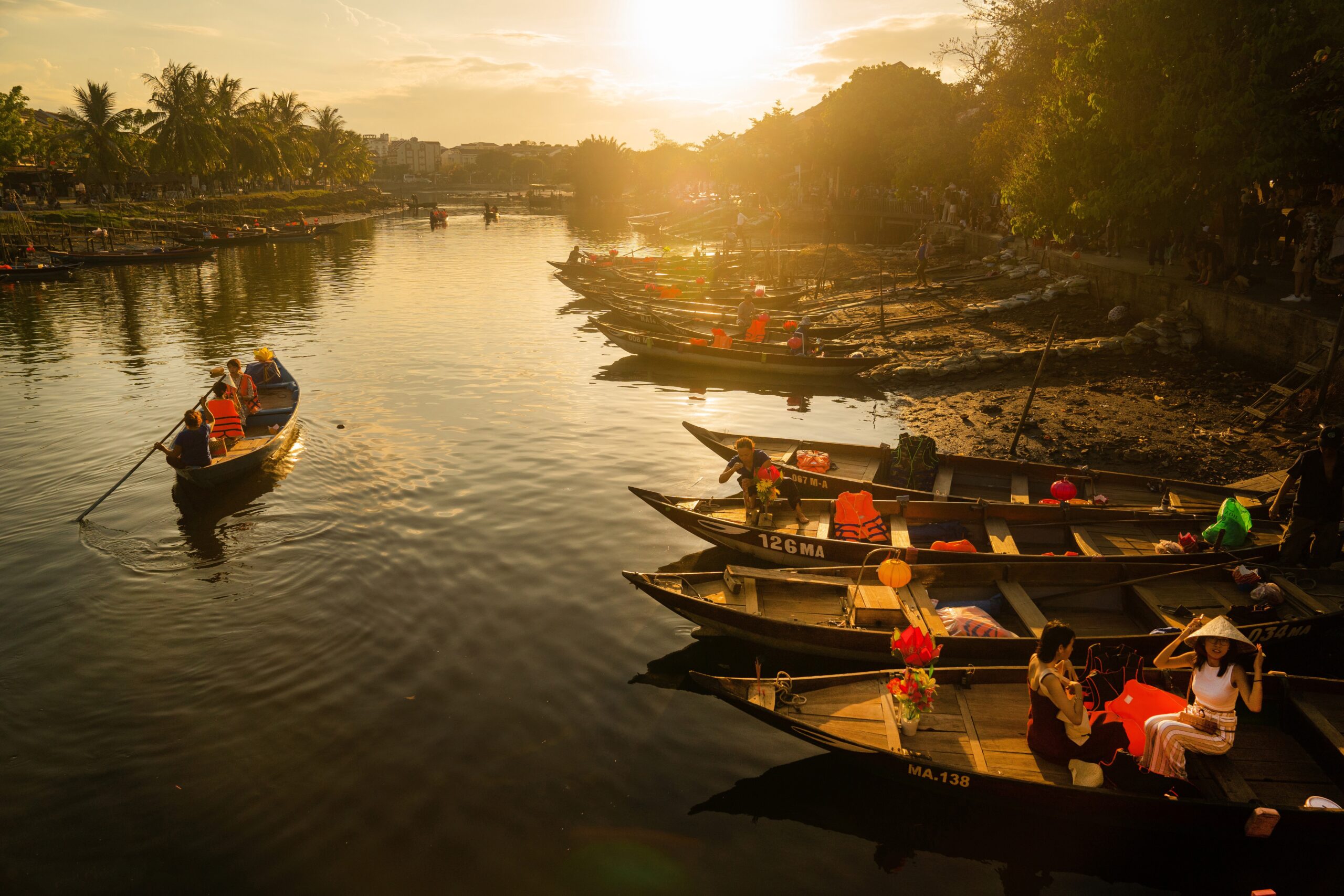
Hoi An Ancient Town at Night — $5 entry pass The lantern-lit ancient town at night is one of Southeast Asia’s most beautiful scenes. Entry passes ($5 for 5 sites) are required for temple interiors but wandering the streets and riverside is free.
My Khe Beach, Da Nang — Free One of Asia’s finest beaches. White sand, warm water, and almost entirely free. Sunbeds and umbrellas cost $2–3; everything else is yours.
Ben Thanh Market, Ho Chi Minh City — Free The atmosphere, the noise, the color — worth an hour of wandering regardless of whether you buy anything.
Paid Experiences Worth Every Dong
Ha Long Bay 2-Night Cruise — $130–180 Non-negotiable for any serious Vietnam budget travel itinerary. See our full Ha Long Bay Budget Cruise Guide for how to find the best deal.
Hoi An Cooking Class — $25–35 The best cooking classes in Vietnam operate out of Hoi An — market tour, instruction on 4–5 dishes, and eating everything you cook. Unforgettable and worth the splurge.
Phong Nha Cave, Quang Binh — $20–30 One of the world’s largest cave systems, and one of Vietnam’s most undervisited major attractions. A day trip from Dong Hoi includes boat entry into the illuminated cave chambers.
Cu Chi Tunnels, Ho Chi Minh City — $15–20 The 250-kilometer tunnel network used during the Vietnam War. A profound and fascinating half-day trip from Saigon.
Sapa Rice Terrace Trek — $25–40 (guided, overnight) The rice terraces of the northern highlands, home to H’mong and Dao ethnic communities. A guided 2-day trek stays in a homestay village ($10–15/night, meals included). One of the best experiences in all of Vietnam budget travel.
8. Fifteen Proven Vietnam Budget Travel Tips That Actually Work {#tips}
Tip 1: Travel south to north in April–June. Most travelers go north to south. Reversing it means you hit Hanoi and Ha Long Bay before the peak summer heat, and arrive in Ho Chi Minh City as the dry season begins. You’ll also move against the tourist flow — quieter guesthouses, easier bookings.
Tip 2: Get a Vietnamese SIM card at the airport. Viettel or Mobifone SIM cards cost $3–5 at Hanoi or Ho Chi Minh City airports and include 1–4GB of daily data. Essential for Grab, Google Maps, and translation. Far cheaper than international roaming for any Vietnam budget traveler.
Tip 3: Always eat where the motorbike helmets are piled outside. A street food stall with 15 motorbikes parked outside and a crowd eating on plastic stools is serving something excellent. This visual cue has never failed me across 30 days of Vietnam budget travel.
Tip 4: Negotiate guesthouse rates for stays of 4+ nights. Every guesthouse in Vietnam will discount for longer stays. Ask directly. Discounts of 15–25% are standard and never advertised.
Tip 5: Use ATMs at major banks only. Vietcombank, BIDV, and Techcombank ATMs have lower fees and more reliable rates. Avoid standalone ATMs in tourist areas. Withdraw larger amounts less frequently to minimize per-transaction fees.
Tip 6: Book sleeper buses, not night flights. A sleeper bus from Hue to Hoi An costs $6 and gets you there in 4 hours. An equivalent flight costs $40 after transfers. The bus is better Vietnam budget travel math — and you arrive in daylight.
Tip 7: Visit Hue and Hoi An before Da Nang. Da Nang is Vietnam’s fastest-gentrifying city — prices rising every year. Hue and Hoi An remain significantly cheaper for equivalent quality accommodation and food. Prioritize them on a Vietnam budget travel itinerary.
Tip 8: Avoid tourist restaurants on the main streets. Any restaurant with a neon sign, an English menu, and a tout standing outside is charging 2–3x the local price. Two streets back, the same food costs half as much.
Tip 9: Take the train between Hue and Da Nang. The Hai Van Pass section — a 30km coastal stretch between jungle mountains and the South China Sea — is one of the world’s great train journeys. Takes 2.5 hours, costs $4–8, and is more scenic than any flight.
Tip 10: Learn 10 Vietnamese phrases. Xin chào (hello), cảm ơn (thank you), bao nhiêu tiền? (how much?), không cay (not spicy), ngon quá (delicious). Locals respond with warmth and often better prices. Basic phrases cost nothing and return everything on a Vietnam budget travel trip.
Tip 11: Buy a banh mi every morning. At $1–2, the banh mi is the greatest breakfast bargain in Vietnam budget travel. Every city has its regional variation. Eat them all.
Tip 12: Book Ha Long Bay before arriving in Hanoi. The best Vietnam budget travel cruise operators at the $130–180 price point sell out 2–3 weeks ahead. Don’t wait until you arrive.
Tip 13: Carry small denominations of Vietnamese dong. Street food vendors and market stalls rarely have change for large bills. Carry 10,000–50,000 VND notes ($0.40–$2) for street food purchases.
Tip 14: Use the Grab Food app for late-night delivery. Many guesthouses in Vietnam have no nearby restaurants open after 10pm. Grab Food delivers local restaurant food to your door in 20–30 minutes at local prices — often cheaper than eating out.
Tip 15: Allow buffer days. Vietnam consistently seduces travelers into staying longer than planned. Budget an extra 3–4 days of financial buffer. You will want them.
9. Vietnam Budget Travel: North vs Central vs South {#regions}
| Region | Daily Cost | Best For | Highlight |
|---|---|---|---|
| North (Hanoi, Ha Long, Sapa) | $30–45 | Culture, nature, history | Ha Long Bay, Sapa treks |
| Central (Hue, Hoi An, Da Nang) | $35–50 | Food, history, beaches | Hoi An ancient town |
| South (Ho Chi Minh City, Mekong) | $38–55 | Energy, food, history | Cu Chi Tunnels, Mekong Delta |
The cheapest region for Vietnam budget travel: North Vietnam — particularly Hanoi and the surrounding provinces.
The best food region: Central Vietnam — Hue and Hoi An have the most distinctive and sophisticated regional cuisines.
The most expensive region: South Vietnam — Ho Chi Minh City’s cosmopolitan energy comes with slightly higher prices, though still extraordinary value by global standards.
10. My Full 30-Day Vietnam Budget Travel Cost Breakdown {#breakdown}
Here is the exact cost of 30 days of Vietnam budget travel — every dong accounted for:
| Category | Total | Daily Average |
|---|---|---|
| Accommodation (30 nights) | $340 | $11.33 |
| Food (30 days) | $255 | $8.50 |
| Transport (intercity + local) | $198 | $6.60 |
| Activities & experiences | $187 | $6.23 |
| Vietnam e-visa | $25 | — |
| Travel insurance (SafetyWing) | $45 | $1.50 |
| SIM card | $5 | — |
| Miscellaneous (toiletries, laundry, tips) | $53 | $1.77 |
| TOTAL | $1,108 | $36.93 |
What $1,108 bought in 30 days of Vietnam budget travel:
- 30 nights in private guesthouse rooms (mostly with breakfast)
- 3 meals a day of some of the best food on earth
- A 2-night Ha Long Bay cruise
- A Hoi An cooking class
- A Sapa overnight trek
- The Cu Chi Tunnels
- The Hai Van Pass by train
- The full length of Vietnam, top to bottom
11. Frequently Asked Questions {#faq}
Is Vietnam cheap to travel in 2026?
Yes — Vietnam budget travel remains among the most affordable in Southeast Asia. Despite gradual price increases in major cities, a comfortable daily budget of $40–55 still covers private accommodation, excellent food, transport, and activities. Numbeo’s Vietnam cost of living data confirms Vietnam’s consistently low consumer prices compared to global averages.
Do I need a visa for Vietnam?
Most nationalities require a Vietnam e-visa, which costs $25 and is processed in 3 business days at the official Vietnam e-visa portal. Citizens of select countries (including several European nations) qualify for visa-free entry for 45–90 days — check the current list at Vietnam Immigration before traveling.
What is the best time for Vietnam budget travel?
Vietnam’s length means weather varies significantly by region. As a general guide:
- North Vietnam: October–April (cool and dry)
- Central Vietnam: February–August (dry season)
- South Vietnam: December–April (dry season)
For the best combination of good weather across all regions and lower prices, February–April is the sweet spot for Vietnam budget travel. See the Vietnam National Administration of Tourism for current seasonal guidance.
Is Vietnam safe for budget travelers?
Vietnam is one of Southeast Asia’s safest countries for travelers. Petty theft (bag snatching on motorbikes in Ho Chi Minh City) is the most common issue — keep bags on your inside shoulder, away from the road. The UK Foreign Office Vietnam travel advisory and US State Department both rate Vietnam as generally safe with normal precautions.
How much cash should I carry for Vietnam budget travel?
Vietnam is still primarily a cash economy outside major hotels and restaurants. Carry enough Vietnamese dong for 2–3 days of spending at all times — typically 500,000–1,000,000 VND ($20–40). ATMs are widely available in cities but sometimes scarce in rural areas. Exchange rates at bank ATMs are significantly better than airport exchange counters.
Quick Reference: Vietnam Budget Travel Summary
| Category | Budget | Mid-Budget | Comfort |
|---|---|---|---|
| Daily total | $25–35 | $40–60 | $70–100 |
| Accommodation | $8–12 | $15–20 | $25–40 |
| Food | $7–9 | $12–15 | $18–25 |
| Transport | $2–3 | $4–6 | $8–10 |
| Activities | $3–5 | $8–12 | $15–20 |
Vietnam budget travel rewards the curious, the unhurried, and the hungry. The longer you stay, the cheaper and richer it gets — better local spots found, better guesthouse rates negotiated, better understanding of a country that has more depth than almost anywhere on earth.
The $40/day Vietnam budget travel experience is not a lesser version of Vietnam. In almost every way, it is the truest version — plastic stools, pho at dawn, motorbikes everywhere, and a warmth from locals that money genuinely cannot buy.
Book the flight. Vietnam is waiting.
Traveling Vietnam on a budget in 2026? Drop your questions or tips in the comments — this guide is updated regularly with reader experiences.
Related Posts:
- Ha Long Bay Budget Cruise: 7 Proven Ways to Find the Best Cheap Cruise
- How I Planned a 3-Week Trip to Southeast Asia for Under $1,500
- Chiang Mai on $30 a Day: The Complete Guide
- 31 Budget Travel Tips: Save Big and Travel More
- The Best Budget Travel Destinations in Southeast Asia (Ranked by Daily Cost) EOF
6 thoughts on “Vietnam Budget Travel Guide: The Shocking Truth About How Much Vietnam Really Costs in 2026”